



Dr. Will Sedley • Head of Innovation Board, Tinnitus Quest
Foreword
When I started my research career as a new medical graduate in 2007, I knew I wanted to better understand the workings of the brain to help treat common and unsolved conditions, but nothing more specific than that. Getting into tinnitus research was by sheer accident. Only after that did I realize what a huge and unsolved problem it is, and how multifaceted and interesting its brain mechanisms are. For me, tinnitus science is all about genuine innovation. Not everything we have tried has worked out, but everything we do in my research group stands to take us somewhere new and meaningful if it does. Time and resources are limited, and it is important to pick the right risks to take on.
Launching the 2026 Tinnitus Quest Research Grants
At Tinnitus Quest, we believe the tinnitus field urgently needs more boldness, more innovation, and a greater willingness to pursue transformative ideas. Incremental progress has value, but millions of people living with tinnitus are still waiting for treatments that meaningfully reduce, or ultimately silence, the condition. That is why I am very pleased to announce the launch of the 2026 Tinnitus Quest research grants.
Following our first grant cycle, which culminated in funding a pioneering transcranial ultrasound stimulation project at the University of Oxford (a project to which I am an advisor), I was honored to take on the role of head of Tinnitus Quest’s Innovation Board. We spent considerable time reflecting on what worked well, what could be improved, and how we can better align the program with our mission of accelerating the path toward transformative tinnitus treatments.
The result is a significantly refined and focused grant program for 2026.
A Stronger Focus on Innovation
Perhaps the most important evolution in this year’s program is an even stronger emphasis on innovative, high-risk-high-gain research.
Tinnitus is an extraordinarily complex condition, and many approaches that have already been explored in humans have unfortunately yielded limited clinical impact. While replication and incremental refinement remain important parts of science, Tinnitus Quest exists specifically to support projects that have the potential to fundamentally shift the field forward with novel, experimental treatment ideas.
For the 2026 cycle, we have therefore made substantial efforts to more clearly define what we mean by innovation, novelty, and transformative potential. We are particularly interested in projects that target core tinnitus mechanisms in genuinely new ways, or that apply insights, technologies, or therapeutics from adjacent scientific disciplines to tinnitus.
We are also explicitly encouraging repurposing studies – testing of drugs and devices already approved for other conditions – especially where there is a compelling mechanistic rationale; as such treatments provide a more direct pathway to market accessibility.
Importantly, applicants will now be asked to clearly describe:
- the tinnitus mechanism and therapeutic target(s) involved;
- how their approach differs from existing strategies;
- why the approach is novel; and
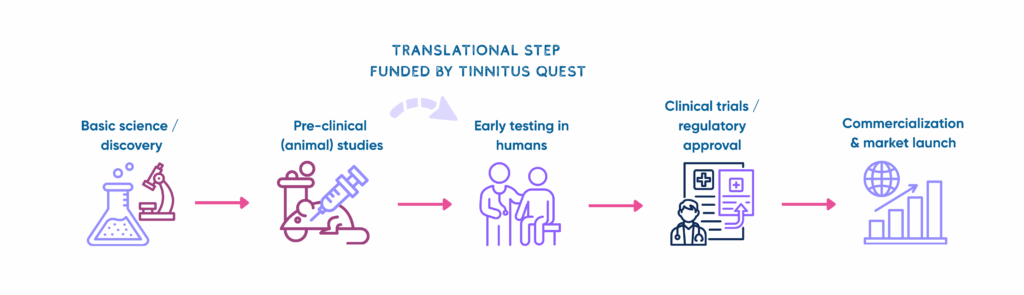
- how successful completion of the project would be an essential step in the pathway toward a tinnitus cure or transformative treatment.
This final point matters enormously. We are not simply looking for scientifically interesting ideas. We are looking for novel ideas that could realistically move the field closer to treatments that change patients’ lives.
Flexible Funding and Hyperacusis Grant
The 2026 cycle introduces flexible grant amounts of up to $200,000, with the possibility for larger requests in exceptional cases subject to additional fundraising.
We are also pleased to announce a new collaboration with Hyperacusis Research. Tinnitus Quest will administer an additional hyperacusis-focused research grant of up to $100,000 on behalf of Hyperacusis Research. This grant will follow the same application, evaluation, and funding process as the core Tinnitus Quest grants.
As someone who works clinically with patients suffering from tinnitus, hyperacusis, and other neurological disorders, I strongly believe that closer integration between these fields is both scientifically and clinically important.
Expanded Eligibility and Scientific Participation
We also recognize that innovation often comes from early-career researchers. For this reason, PhD students are now eligible to apply for funding, although they may not serve as principal investigators and must demonstrate appropriate senior oversight and mentorship.
In addition, applicants may now invite one additional team member or advisor to participate in pitch meetings, provided doing so does not create a conflict of interest.
Improving Scientific and Operational Rigor
Several changes this year are aimed at improving scientific rigor, operational clarity, and responsible stewardship of donor funding.
The previous standard 15% indirect cost allowance has been removed. Salary and equipment costs must now be directly necessary for successful execution of the project and not reasonably available through existing institutional resources.
We are also introducing a formal due diligence phase following conditional grant selection. This may include requests for additional information regarding budgets, staffing, timelines, ethics approvals, institutional support, or project feasibility before a final funding agreement is executed.
In addition, funded projects must commence within six months of signing the grant agreement. This means that patient recruitment (or, if applicable, laboratory work) should start within six months, giving grant recipients sufficient time to secure the necessary ethics approvals, while ensuring a rapid kick-off to the project.
Transparency, Governance, and Conflict of Interest Management
As a patient-driven nonprofit organization, Tinnitus Quest places a very high value on transparency, fairness, and independence in grant decision making.
For the 2026 cycle, we are publishing an updated Conflict of Interest Policy that outlines how potential conflicts are identified and managed throughout the review process. This includes clear recusal procedures for reviewers, advisors, and board members where appropriate.
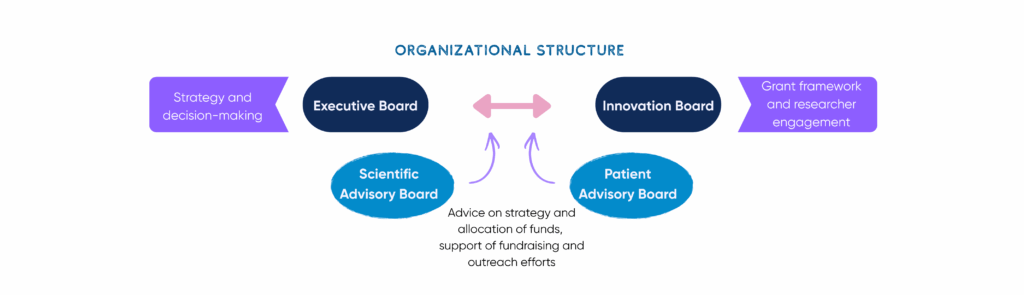
We are also providing greater transparency regarding our governance structure and funding decision-making process. The accompanying graphics included with this announcement illustrate how our governance bodies interact to come to well-balanced decisions.
Scientific excellence remains central to the process, but the patient voice also plays an important role, via the input of our Patient Advisory Board, and further strengthened by the fact that 3 of the 5 Executive Board members are tinnitus patients. We believe this combination is one of the defining strengths of Tinnitus Quest.
Looking Ahead
The tinnitus field is entering a fascinating and potentially transformative period. Advances in neuroscience, neuromodulation, imaging, pharmacology, AI, and hearing restoration are opening new possibilities that would have seemed unrealistic only a decade ago.
But progress does not happen automatically. It requires coordination, ambition, funding, and a willingness to support unconventional but well-founded ideas.
That is the role Tinnitus Quest hopes to play.
I would like to thank our donors, volunteers, scientific advisors, patient advisors, and research community for helping us build this initiative. We are still a young organization, but we are deeply committed to accelerating meaningful progress for people living with tinnitus.
We now look forward to receiving the next generation of bold ideas.
Applications for the 2026 Tinnitus Quest Research Grant Cycle are now open. Click here to apply and learn more about the application and evaluation process.
Tinnitus Quest ❤️
Have a bold idea? Join our quiet revolution by applying for a grant.
Our 2026 Grants







4 Comments
I would like to be considered for the next trial. I have severe tinnitus caused by the Covid vaccine. It is in my head and is very difficult to live with. Sleep is almost impossible. It affects every aspect of my life.
I had mild tinnitus from I believe my Rx Atenolol. After my Covid vaccine in 2021 my tinnitus got worse.
Hi Jane, I’m sorry to hear you’re suffering so much. Our upcoming trial will be taking place in Oxford (UK), so you would probably only be a candidate if you live in that area. You can contact us at info@tinnitusquest.com if that is the case, so that we can provide further details. I hope you will feel better soon.
Please consider me for the trial. I have had constant, severe tinnitus since July 4th 2026. I have some hearing loss (mild/moderate in the right ear and moderate/severe in the left ear) at 4 kHz.