

Jack Rubinacci • PR Manager of Tinnitus Quest
Foreword
Sound can bring immense joy. But for millions living with tinnitus or hyperacusis, it can also trigger fear, stress, and even pain. So, what responsibility does the audio industry have in balancing these two realities?
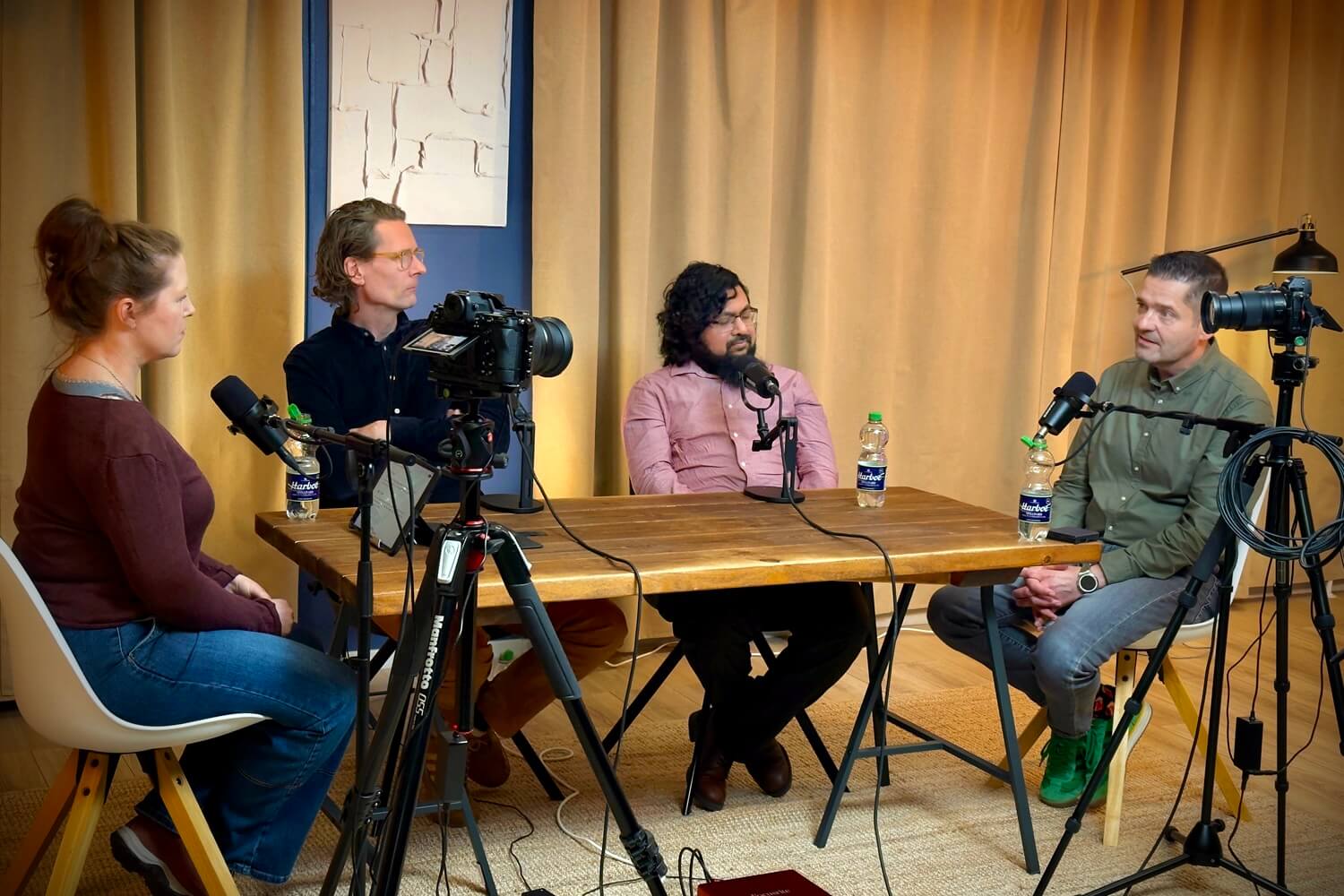
In Copenhagen — a longstanding hub for audio and sound engineering — we recently brought together leaders from across the sound innovation space to explore the future of hearing health.
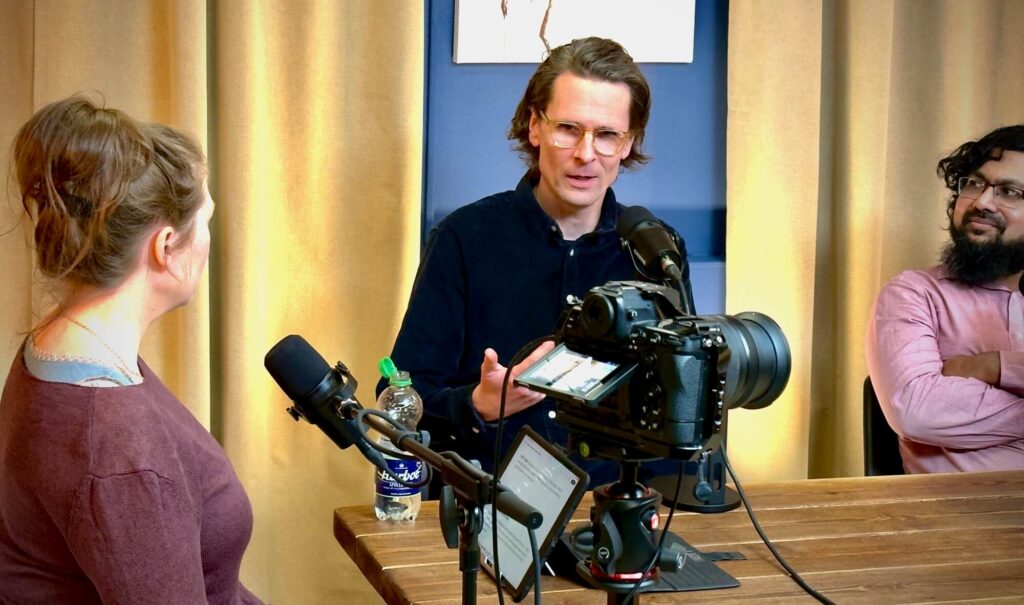
Our guests included Søren Majlund, Senior Commercial Executive at HARMAN International; Tanveer Bhuiyan, PhD, Senior Engineer and Researcher at HARMAN International; and Jeppe Lindegaard, Head of Branding, Strategy and Events at the Danish Sound Cluster.
Together, they represent three critical pillars: global industry, cutting-edge research, and cross-sector collaboration.
As Jeppe put it, the Danish Sound Cluster exists to connect these worlds: “What we do is unite people who are working in the sound field, to share experience, and hopefully start new collaborations.”
The Human Side of Technology
While much of the conversation focused on future technologies, we kept returning to something more immediate: what it actually feels like to live with tinnitus.
Søren shared his own decades-long journey, describing a moment many will recognize: “The ringing tone suddenly takes days … and suddenly one day, it doesn’t disappear, and then it’s just there.”
Like millions of others, he encountered a familiar response: “You go to your doctor, he says, ‘there’s nothing we can do.’”
This gap between lived experience and available solutions remains one of the defining challenges in tinnitus today. For Søren, this experience has also become a driver: a reason to push for progress from within the industry itself.
Industry Taking Responsibility
One of the strongest themes to emerge was responsibility.
HARMAN, an independent subsidiary of Samsung Electronics and home to brands like JBL and AKG, is one of the largest players in global audio. With that reach comes influence. And the responsibility to support and promote hearing health.
As Søren noted: “We want to be in the front, helping and supporting these initiatives.”
This shift from passive awareness to active responsibility is an important step forward.
Technology, Innovation, and the Path Ahead
The discussion also explored how modern audio engineering is beginning to engage more directly with hearing health. As Tanveer explained, the future is not just about sound delivery, but about understanding perception itself:
“We need to take care of how people perceive sound… also in terms of perceiving the sound in the brain.”
Advances in sensors, brain signal analysis, and wearable technologies are opening new possibilities. In some cases, researchers are already identifying measurable physiological markers linked to tinnitus:
“There’s a distinct physiological marker in their brain waves, and those are very easily detectable features.” (Tanveer)
These developments point toward a future of more precise detection, personalization, and potentially treatment.
As Tanveer added: “With the advancement of technology, we can soon be able to tackle tinnitus with sensor technology and of course AI.”
An Awareness and Funding Challenge
Despite this progress, a familiar challenge remains: tinnitus is still widely misunderstood and significantly underfunded. As Jeppe noted: “The challenge has been to raise funding.”
Part of the difficulty lies in the nature of the condition itself: “Tinnitus is still some kind of riddle to many people. They don’t really know what to think or say.” (Jeppe)

Looking Forward
There is still a long way to go. But there is also momentum. Hearing health and tinnitus are increasingly part of the conversation within the audio industry. As Søren put it:
“I very much welcome that tinnitus is becoming more and more visible and talked about as a health problem for so many people around the globe, and something that we hopefully in the future can help.”
We closed the session with a photo shoot alongside Danish music star Bryan Rice, who has supported Tinnitus Quest from the very beginning and continues to lend his voice to our mission.
It was genuinely encouraging to see leaders in the audio and sound innovation space engaging with tinnitus — not just acknowledging the challenge, but beginning to take responsibility for addressing it.
We are grateful to all our guests for their openness and their commitment to this important conversation.
You can watch the full conversation here: