
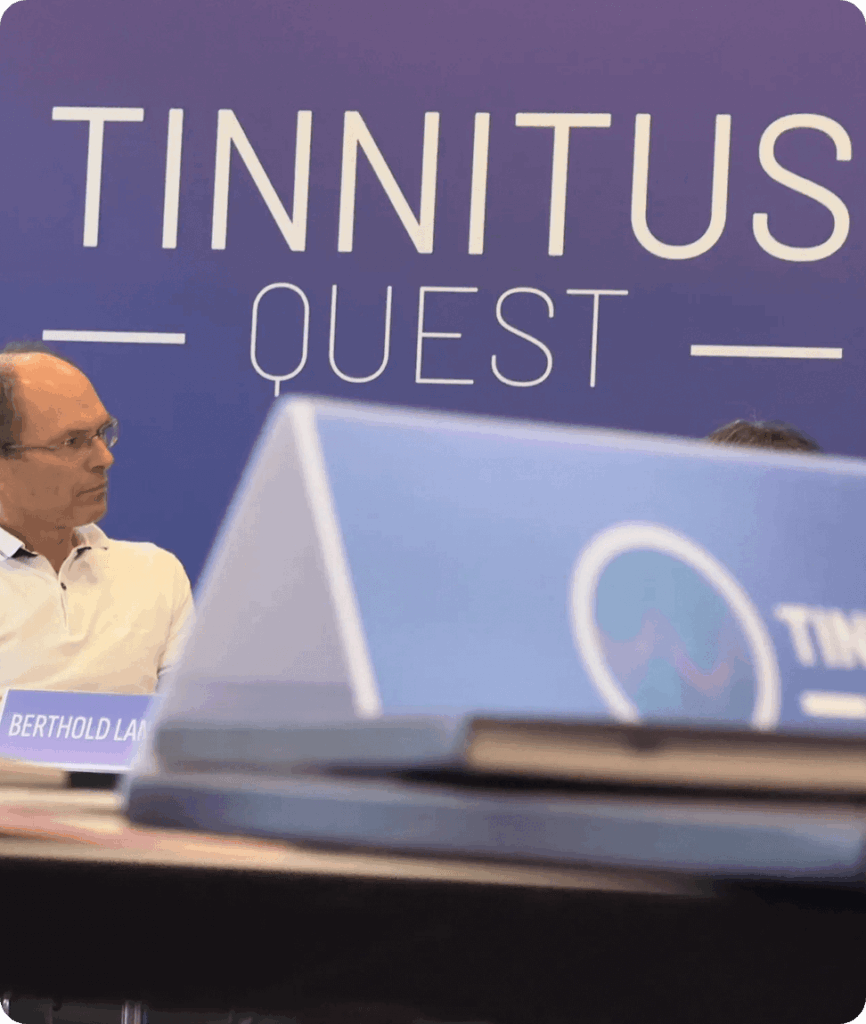
The field is fragmented. Researchers often work in silos, unaware of one another’s work. They are placed in competition with each other —not by choice, but because the academic system’s incentives push them in that direction. Meanwhile, tinnitus sufferers urgently need better answers. And to get there, we need collaboration, cross-disciplinary input, and a shared sense of direction.
We need researchers around the same table, talking openly, questioning assumptions, challenging each other, and defining the concrete steps needed to move toward true biomedical solutions that might one day silence tinnitus.
- We need younger researchers motivated to join the cause.
- We need a common roadmap.
- And above all, tinnitus research must be patient-driven.
There is no need for more studies on behavioral therapies or coping strategies. Those approaches can help some people, and we would never discourage anyone from using what works for them. But when it comes to research, the focus must shift toward biomedical interventions that have the potential to reduce or eliminate tinnitus at its source. To achieve that, it’s not enough to work in isolation or “poke around in the dark.” The field needs clarity, structure, and coordinated action.
A New Approach: The 2025 Tinnitus Hackathon
In October 2025, we brought together several dozen researchers, research funders, and patient advocates in Wiesbaden, Germany, for a day-and-a-half event designed to spark exactly this kind of meaningful collaboration.
The Tinnitus Hackathon was built around real discussion, healthy debate, and even healthy disagreement. We explored research methodologies, data-sharing frameworks, the possibilities of AI, areas of consensus and contention, and the critical gaps in knowledge that must be resolved to accelerate progress.
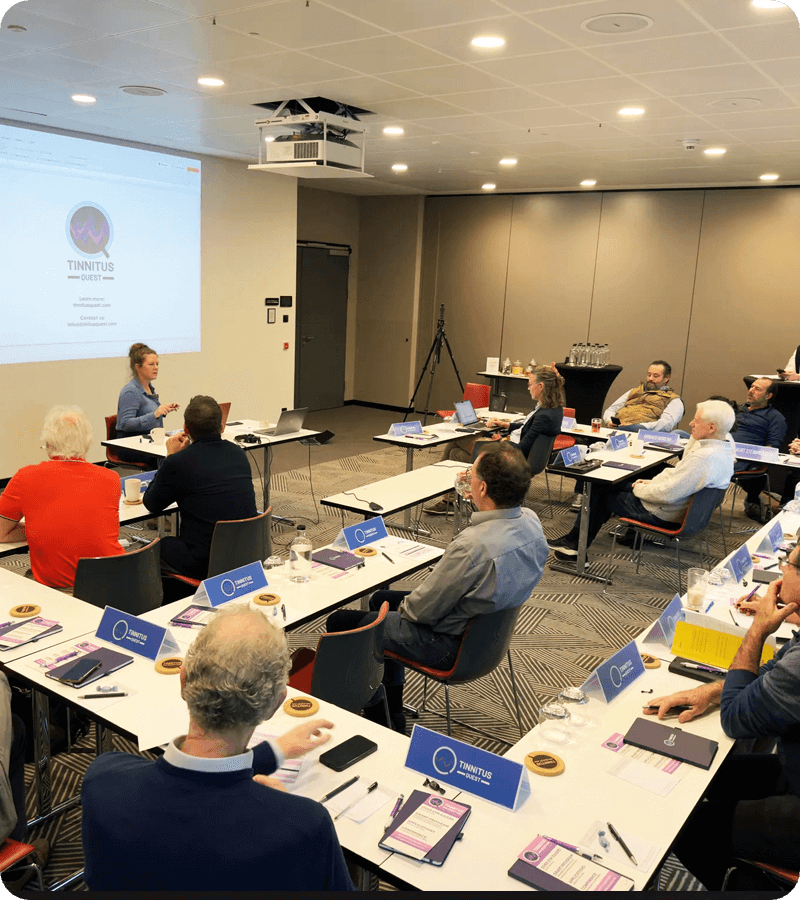
Of course, a day and a half is not enough to answer every question or reshape entire careers. But it is enough to begin shifting momentum. It became clear that this kind of convening cannot be a one-off. To achieve real progress, the right people need to meet regularly, to build trust, share ideas, and map out the concrete research priorities that will meaningfully move the field forward.
That is exactly what we plan to continue in 2026 and beyond. We believe this work is just as important as directly funding research (i.e. through our grants program).
If you’re curious to explore what was discussed — what researchers agreed on, where they disagreed, and what the path forward might look like — you can view the full Hackathon Report below, or access it directly from here.
We hope you find it engaging, thought-provoking, and a sign of what’s possible when a field comes together with shared purpose, driven by patients’ needs.
To be continued.